Mastering CSS Current Affairs Notes from Daily Newspapers
If there is one subject that constantly keeps CSS candidates in a state of low level anxiety it is Current Affairs. Unlike History or Political Science which have a static syllabus Current Affairs is a living breathing monster that changes every single morning when the newspaper arrives.
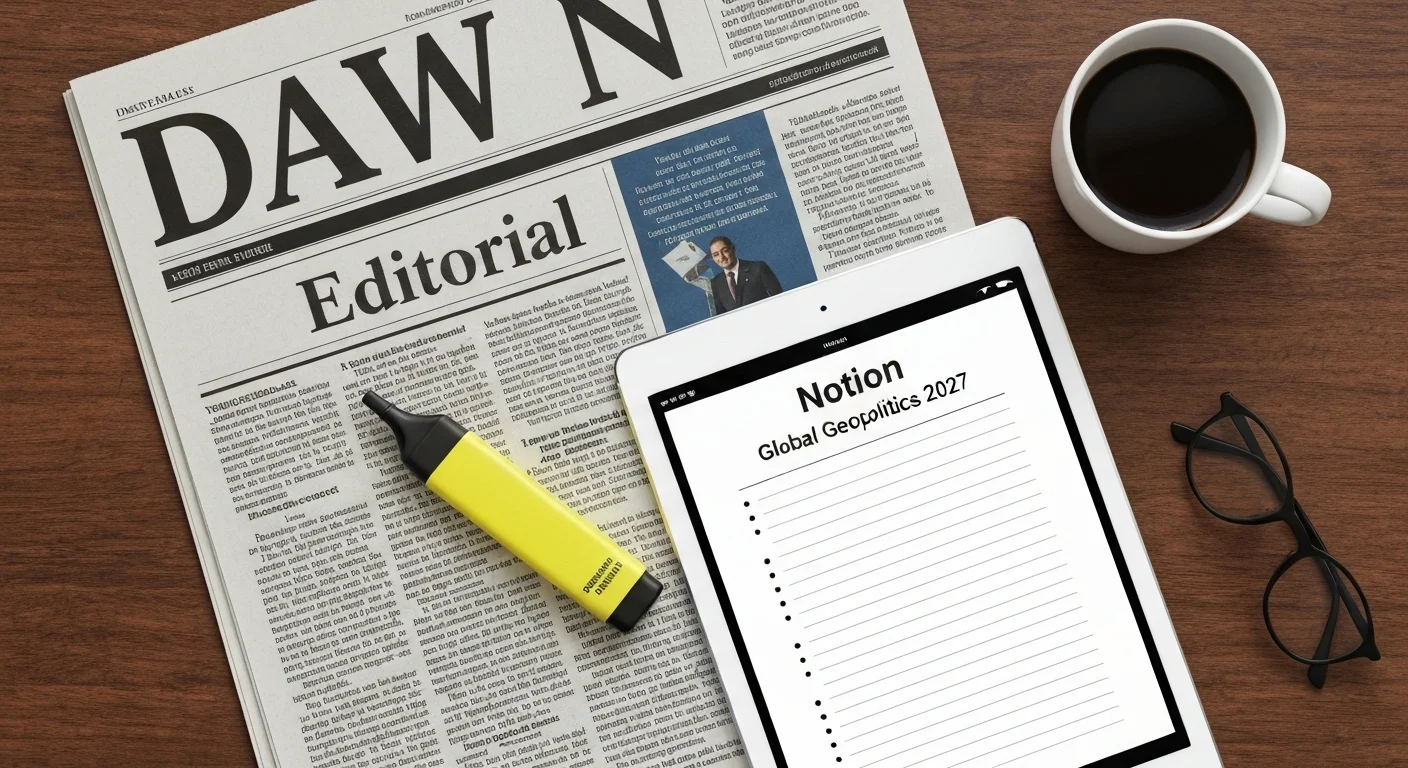
Many candidates believe the secret to passing is reading DAWN or The News for 3 hours every single day. This is a massive mistake. Reading the news passively and actually extracting usable exam-focused CSS current affairs notes are two entirely different skills.
If you are spending hours reading the paper but freezing when asked to write an analytical paragraph on the US-China trade war your note-taking strategy is flawed.
Here is the ultimate guide on how to stop reading the newspaper like a civilian and start extracting data like a future bureaucrat.
1. What Actually Matters in the Newspaper
The FPSC examiner does not care if you know the exact day a minor political skirmish happened in the national assembly. They care about macro-level structural issues.
When you open the newspaper you must brutally filter the noise. You should be scanning exclusively for the following four pillars.
- National Issues Specifically economics circular debt IMF packages constitutional amendments and political stability.
- Regional Dynamics Relations with neighboring countries specifically India Afghanistan and the proxy wars of the Middle East.
- Global Superpower Politics US-China hegemony the Russia-Ukraine war and shifting global trade routes.
- Global Socio-Economic Themes Climate change artificial intelligence water scarcity and global recessions.
If a news article does not fall into one of these four pillars skip it immediately. Do not waste time reading criminal incident reports celebrity gossip or local city politics.
2. The Anatomy of Perfect CSS Current Affairs Notes
The biggest mistake candidates make is practically copying the entire DAWN editorial into their notebooks. By December they have 4 massive notebooks filled with unstructured text that they can never revise.
Your CSS current affairs notes for any given topic must never exceed one single A4 page.
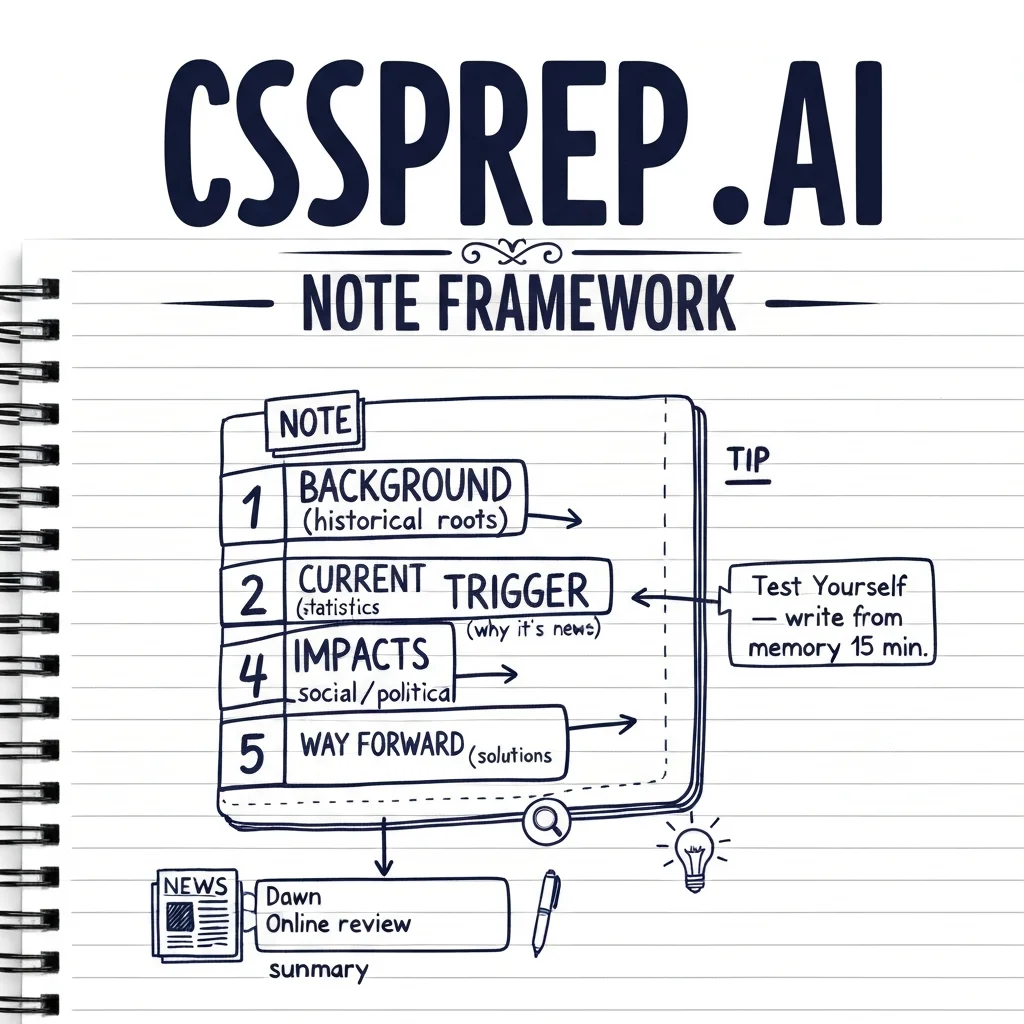
The Universal Structure for Every Topic No matter if the topic is "The Kashmir Issue" or "The Rise of Electric Vehicles" your notes must strictly follow this structure.
- Background Context 2-3 Bullet Points What is the historical root of this issue.
- Current Trigger 1-2 Bullet Points Why is this topic in the news this month.
- The Data Facts & Figures This is the most critical section. You must write down 3 to 4 hard statistics. For example "Inflation hit 29% in May 2023" or "The US invested $280 billion in the CHIPS Act." Data is what separates a CSP from a layman.
- The Impacts Socio-Economic/Political How does this event affect Pakistan or the world structurally.
- The Way Forward Solutions What do the experts recommend we do about it. The examiner always wants solutions not just complaints.
3. How to Process the Editorial Section
The Editorial and Opinion pages are the goldmine of CSS current affairs notes. The reporters on the front page tell you what happened. The experts on the editorial page tell you why it matters.
- Read a maximum of two editorials per day.
- Do not highlight the entire article. Look for the author's thesis statement usually in the first paragraph.
- Extract any robust vocabulary words that precisely define the situation. Instead of writing "The economy is bad" write "The economy is experiencing severe stagflation."
- Look specifically for the "Way Forward" paragraph usually at the very end of the op-ed. Authors often provide brilliant actionable policy recommendations here. Copy these directly into your notes.
4. Digital vs Physical Note Taking
In the age of CSS 2027 physical notebooks are becoming a massive liability for Current Affairs. A topic like "US-Taliban Relations" will update dynamically over 12 months. If you use a physical notebook you will constantly be running out of space to add new updates.
Go Digital. Using digital tools allows you to endlessly update your notes tag them by subject and search them instantly. Use apps like Notion or Evernote where you can create a single "Afghanistan" document and update it chronologically.
If you struggle to see the big picture of a complex ongoing geopolitical conflict visual note-taking is your ultimate weapon. Utilize our CSSPrep.AI Topic Explorer. You can create a central node for "The Middle East Crisis" and visually branch out to various proxy factions economic impacts and UN resolutions. This visual mapping allows you to comprehend incredibly dense topics in seconds during your final revisions.
5. Testing Your Notes
Taking beautiful notes is useless if you cannot translate them into exam answers.
Once you have compiled a solid one-pager on a topic like "Climate Change in Pakistan" try writing a 300-word critical paragraph based entirely on your notes. If your paragraph sounds too descriptive and lacks punch submit it to our CSSPrep.AI Essay Evaluator. The AI will instantly tell you if your argument is structurally weak or if you failed to integrate the data you worked so hard to extract.
Useful Resources
- Dawn News The undisputed king of English print journalism in Pakistan. Focus exclusively on the editorial and op-ed pages.
- The Economist For global macro-economic and political perspectives. Their data journalism is unmatched giving you the exact statistics you need for your notes.
Remember you are not reading the newspaper to become a journalist. You are reading it to extract data arguments and vocabulary. Be ruthless with your time structure your notes perfectly and dominate the Current Affairs paper!